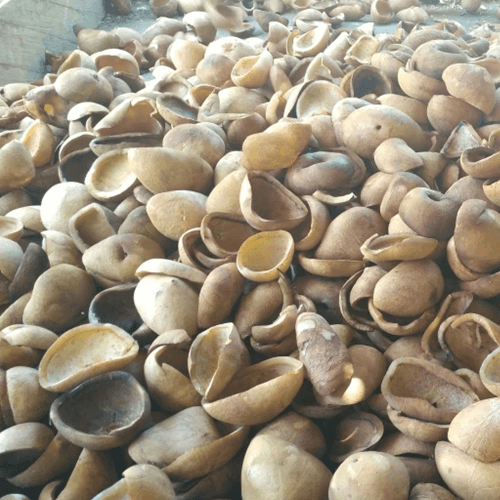
Copras
Copra Making Techniques
In general, coconut farmers today, especially in the Tembilahan area, produce copra (dried coconut meat) using sunlight through UV house drying systems or oven drying methods. However, some still use traditional smoke drying techniques.
Copra commonly circulated in the local market typically has a moisture content of around 8–12%. For higher-quality copra, a lower moisture content is preferred, as it reduces the risk of rotting and mold while also lowering handling and storage costs. For international trade standards, good-quality copra generally has a moisture content of approximately 5–6%.
Achieving a moisture level of 5–6% can be challenging when relying solely on sunlight. However, with the use of controlled drying systems such as ovens or mechanical dryers, this standard can be consistently achieved.
High-quality copra begins with high-quality coconuts. However, due to the significant price difference between fresh coconuts and copra, many farmers prefer to sell fresh (husked) coconuts rather than process them into copra. As a result, much of the copra available in the market today is produced from off-spec coconuts, such as over-mature coconuts with sprouting shoots, undersized coconuts, or coconuts harvested before optimal maturity.
To meet market demand while maintaining quality standards, we supply copra in three classifications based on size, shape, and color.
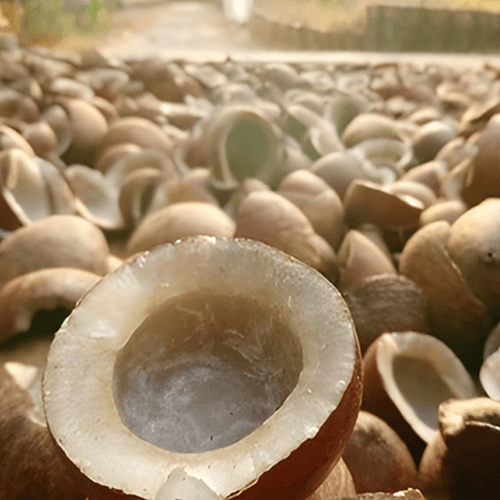
Edible Copra
Edible copra is a premium-grade copra characterized by its clean white color, uniform shape, and controlled size, typically not exceeding 8 cm in diameter. Produced from carefully selected coconuts and processed under controlled drying conditions, it offers low moisture content, minimal impurities, and consistent quality, making it suitable for food-grade and high-standard processing applications.
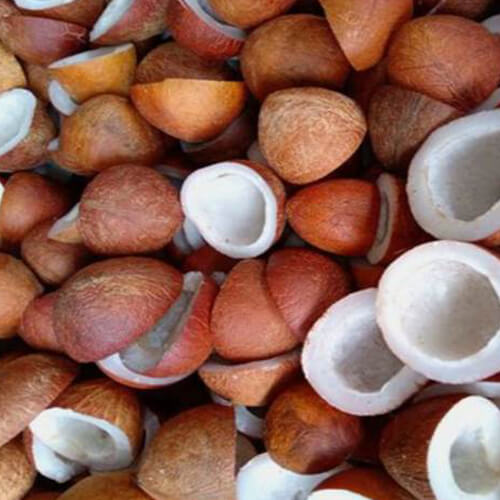
Regular Copra
Regular copra is produced from mature coconuts and typically features a white to slightly off-white color with fairly uniform shape and size. While it may have minor variations compared to premium-grade copra, it maintains reliable quality and is suitable for general industrial applications such as coconut oil extraction and other processing needs.
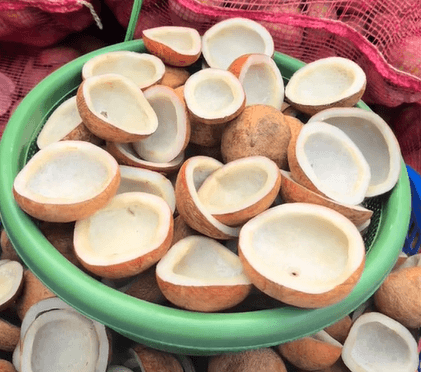
Industrial Grade Copra
Industrial grade copra refers to copra with natural variations in shape, color, and size, falling outside higher-grade classifications. It is typically produced from coconuts that may not meet premium selection criteria, yet remains suitable for various industrial applications where flexible specifications are acceptable.